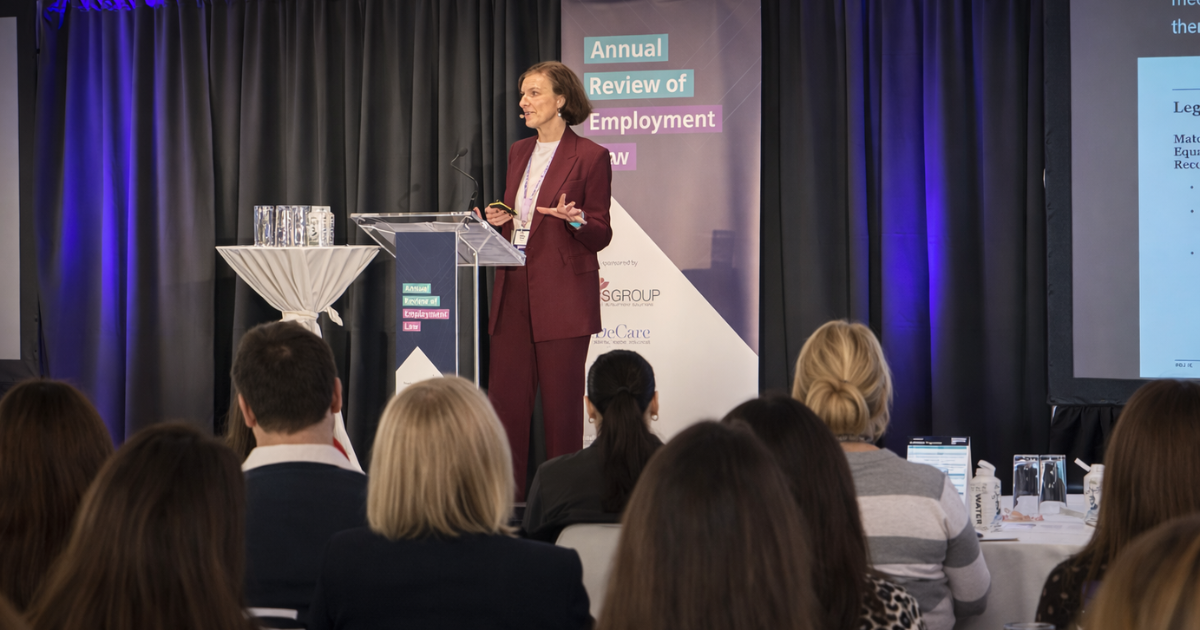

Caroline Reidy is Head of HR Solutions at NFP and a HR and Employment Law Specialist. Caroline sold her company, The HR Suite, in 2025 to NFP, an AON Company, and as of 17th November 2025 The HR Suite officially rebranded to NFP.
Caroline is a former member of the Low Pay Commission and is also an adjudicator in the Workplace Relations Commission. Caroline is also an independent expert observer appointed by the European Parliament to the Board of Eurofound. Caroline is also on the Board of the Design and Craft Council Ireland and is a Governor on the Board of Munster Technology University.
She has also completed a Master's in Human Resources at the University of Limerick, and she is CIPD accredited as well as being a trained mediator. Caroline completed her diploma in Company direction from the IOD with a Distinction and completed her assessment to become a Chartered Director of the IOD. Caroline had worked across various areas of HR for over 25 years in Kerry Group and in the retail and hospitality sector, where she was the Operations and HR Director of the Garvey Group prior to setting up The HR Suite in 2009.
She has also written 2 books, has done a TEDx and is a regular conference speaker and contributor to national media and is recognised as a thought leader in the area of HR and employment law. Caroline also mentored female entrepreneurs on the Acorns Programme. Originally from Ballyheigue, Co. Kerry, now living in Dublin, is very proud of her Kerry roots.
The EU Platform Work Directive (Directive (EU) 2024/2831) was adopted in October 2024 and must be transposed into Irish law by 2 December 2026. For HR, it prompts a review of where digital rules shape work, because they can trigger employment, pay, equality, and data/AI obligations.
If an organisation uses an app or digital tool to allocate shifts, score performance, or restrict access to work, the Directive deserves attention - even if the business would not describe itself as a platform.
In simple terms, it links three topics HR already manages: employment status, working conditions, and data/AI governance. It targets misclassification and algorithmic management - automated systems that allocate tasks, monitor performance, influence pay, or limit access to
Continue reading
We help hundreds of people like you understand how the latest changes in employment law impact your business.
Please log in to view the full article.
What you'll get:
- Help understand the ramifications of each important case from NI, GB and Europe
- Ensure your organisation's policies and procedures are fully compliant with NI law
- 24/7 access to all the content in the Legal Island Vault for research case law and HR issues
- Receive free preliminary advice on workplace issues from the employment team
Already a subscriber? Log in now or start a free trial